TSN Lecture by Emre Erol
Wednesday 19 June 2024 | 16.00-17.30 CET | Utrecht University | Janskerkhof 3 | Room 006 | On-site and Online| Registration required
Today, a superficial gaze at the diverse landscape of the political left at a global level could make one observe an overwhelming representation of leftist movements that are strongly secular and critical of religion in general. However, that generalization does not hold strong under academic scrutiny. Religion and political left have a complicated, intertwined, and dynamic relationship, in the past and the present. Although some studies point out to strong anti-religious tendencies among contemporary socialists in Western Europe in the present, others with a broader perspective regarding the politics of the left point out to the multiplicity of approaches towards religion ranging across indifference, hostility, limited welcome, and incorporation. In the past, socialist movements had as much an intertwined history with religion (or various expressions of religiosity) as it did with liberalism and, employed similarly indifferent, hostile, or embracing attitudes.
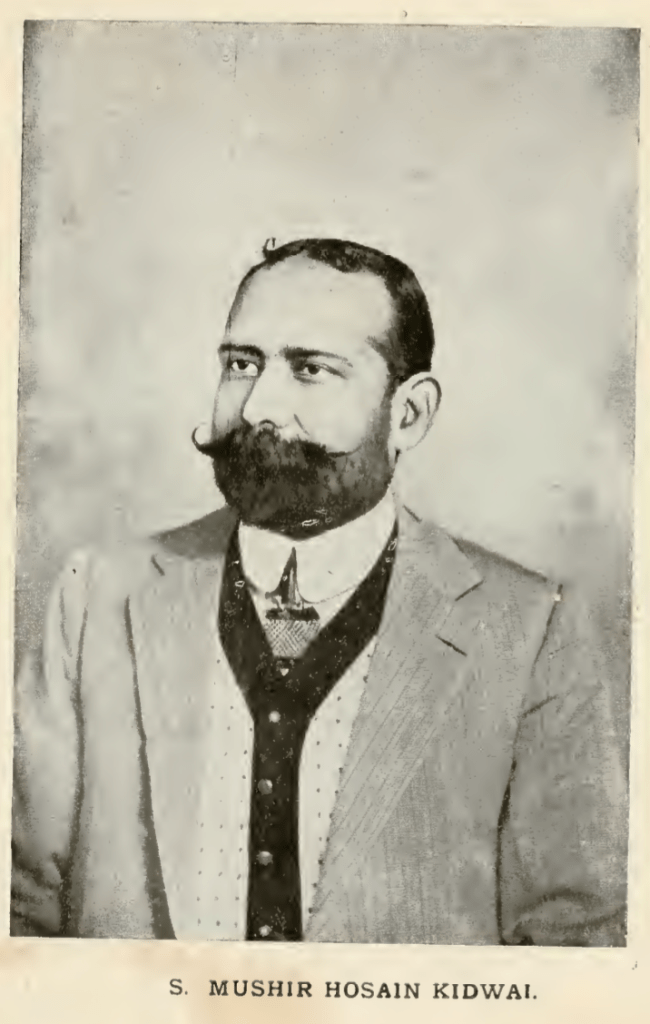
This presentation discusses Mushir Husein Kidwai’s life (1878-1937) and works, which represent a perfect historical testament to a particular form of that complicated relationship, namely the fusion of socialist ideas with theopolitics and nationalism within an anti-colonial historical setting at the intersection of the Global North and the Global South. Kidwai’s attempts to fuse Islamism and Muslim nationalism with Socialism presents a valuable example of the permeable boundaries between modern ideologies and, an embracing strategy towards religion.
About the speaker
Emre Erol is currently fulfilling his duty as the Director of Foundations Development at Sabancı University; a unit coordinating the unique core-curriculum system of Sabancı University, one of the highest-ranking institutions in Turkey, for all undergraduate students. He received his bachelor’s and master’s degrees from Sabancı University, in Social and Political Sciences, and in History respectively. In 2014, he received his PhD in Middle Eastern Studies from Leiden University in the Netherlands, and his dissertation is published as a book titled The Ottoman Crisis in Western Anatolia / Turkey’s Belle Époque and the Transition to a Modern Nation State by I.B. Tauris in 2016. He worked at Leiden University between 2009 – 2016 in the School of Middle Eastern Studies, the International Studies, and the International Honours College at the Hague (LUC). He taught graduate and undergraduate level courses in the fields of history, area studies, political science, and philosophy. Since 2016, he has been a faculty member in the Faculty of Arts and Social Sciences of Sabancı University.
His research covers topics such as economic and social history of the Ottoman Empire and the Republic of Turkey, European-Ottoman encounters and diplomacy, personal histories and ego-documents of the Young Turks, history of migrations in the Ottoman Empire, history of socialisms and nationalisms in the Ottoman Empire and Turkey, history of port-towns and port-cities in the Eastern Mediterranean, digital humanities, and world history. He has done consultancy work for international organizations including UNESCO and The Institute for Historical Justice and Reconciliation (IHJR).
 Turkey Studies Network in the Low Countries
Leave a comment